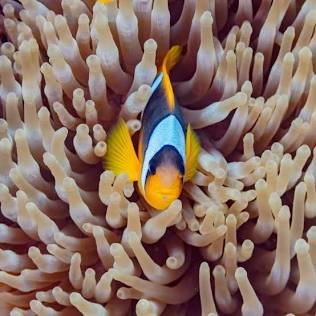
The “Nemo fish” is the popular name for the clownfish (also known as the anemonefish), belonging to the subfamily Amphiprioninae. Made famous by Pixar’s animated movie Finding Nemo, these small, vibrant marine fish are widely recognized for their bright coloration and fascinating relationship with sea anemones.
Key Facts About the Nemo Fish
- Scientific Classification: Family Pomacentridae, Subfamily Amphiprioninae.
- Appearance: Most species feature bright orange, yellow, or reddish bodies outlined with bold white vertical stripes and thin black borders.
- Habitat: Native to the warm tropical waters of the Pacific Ocean, Indian Ocean, and the Red Sea. They inhabit shallow coral reefs and are never found in cold oceans or freshwater.
- Size: Small reef fish growing between 7 to 15 centimeters (3 to 6 inches) in length depending on the exact species.
Symbiotic Relationship with Sea Anemones
The defining biological trait of the clownfish is its mutualistic relationship with sea anemones:
- Immunity to Stings: Sea anemones have stinging tentacles that paralyze most fish. Clownfish build up a special layer of protective mucus on their skin that makes them immune to the anemone’s toxins.
- Shelter & Protection: The anemone provides a safe home where predators cannot reach the clownfish.
- Mutual Benefit: In return, the clownfish cleans the anemone by eating parasites, wards off anemone-eating fish, and provides nutrients to the anemone through its waste.
The Red Sea Clownfish (Amphiprion bicinctus)
While the classic movie character is based on the Ocellaris Clownfish (Amphiprion ocellaris), divers in Hurghada and the Red Sea regularly encounter the endemic Red Sea Clownfish (Amphiprion bicinctus).
Unlike the Pacific three-striped variety, the Red Sea clownfish features two distinct vertical white bars across a bright yellow-to-orange body and is a highlight for scuba divers and snorkelers exploring local coral reefs.