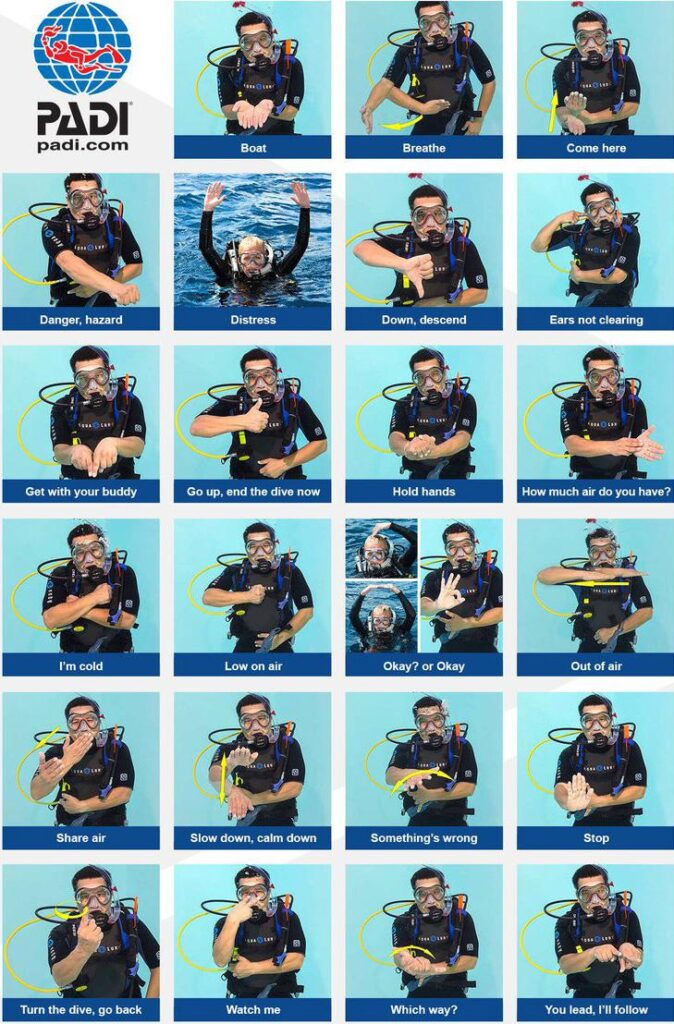
Underwater communication is one of the most important skills in scuba diving. When you are enjoying scuba diving in Hurghada or exploring the reefs of the Red Sea, verbal communication is impossible. Divers rely entirely on clear and immediate visual signals.
Diving signals are not just a form of communication — they are a core safety system used worldwide. Whether you are diving for the first time or already certified, understanding and reacting correctly to signals can prevent accidents, avoid confusion, and ensure a smooth dive experience.
In busy dive sites around Hurghada, where multiple groups may be underwater at the same time, clear communication becomes even more important.
Standard Diving Signals Used Worldwide
The standard hand signals used by scuba divers form a universal communication system practiced everywhere. These signals are taught in all professional training programs and are used daily during diving in Hurghada.
Because they are standardized, a diver trained in Europe, Asia, or Egypt can communicate effectively underwater without language barriers. This is especially important in international diving destinations like the Red Sea, where divers from different countries dive together.
Essential Signal Categories
Every signal has a clear meaning related to:
- Safety: Emergency, problem, and comfort signals.
- Direction: Turn around, level off, go up, or descend.
- Air Management: Indicating pressure gauge readings and low-air warnings.
- Dive Control: Boat orientation, buddy checks, and safety stops.
Understanding them correctly allows divers to react instantly and stay coordinated throughout the dive.
How Diving Signals Improve Safety Underwater
During any dive, small misunderstandings can quickly turn into serious situations. Diving signals eliminate this risk by providing simple and direct communication.
Key Safety Benefits
Signals related to air supply, direction, or equipment allow divers to:
- Monitor Buddy Status: Continuously keep track of air levels and physical comfort.
- React Instantly: Respond quickly to environmental or depth changes.
- Prevent Anxiety: Eliminate confusion that could lead to panic situations.
- Maintain Dive Plans: Stick strictly to pre-planned depths and bottom times.
In guided dives, instructors and dive leaders rely heavily on these signals to manage the group safely, especially during daily boat diving trips in Hurghada.
Diving Signals in Real Diving Situations
In real diving conditions, signals are used constantly — not just in emergencies.
During a typical day of scuba diving in Hurghada, you will use signals to:
- Communicate regularly with your dive buddy.
- Follow your dive guide along the reef line.
- Indicate your remaining air supply at regular intervals.
- Confirm mandatory 3-minute safety stops at 5 meters.
- Acknowledge directions and group headcounts.
This clear communication makes every dive more organized, relaxed, and enjoyable.
Learning Diving Signals as a Beginner
If you are new to scuba diving, learning these hand signals is an essential part of your initial training.
During the PADI Open Water Diver course in Hurghada, you will practice:
- All essential hand and equipment signals.
- Direct underwater buddy communication.
- Standard protocols for different dive situations.
This practical training ensures that even absolute beginners can communicate with confidence from their very first ocean dive.
Tips to Communicate Clearly Underwater
Even with standardized hand signals, clear underwater communication requires practice and awareness.
Underwater Best Practices
- Establish Eye Contact: Always gain your buddy’s attention before making a signal.
- Move Deliberately: Keep all hand movements slow, distinct, and easy to read.
- Maintain Proximity: Stay within close arm’s reach of your dive buddy.
- Confirm Signals: Always respond with an “OK” signal to confirm you understood.
- Stay Controlled: Maintain calm buoyancy control while communicating.
Why Diving Signals Matter in Hurghada
Hurghada is world-famous as a top Red Sea diving hub, known for:
- Vibrant coral gardens and drop-off walls.
- Diverse marine species, from turtles to rays.
- Exceptional underwater visibility year-round.
Because dive sites can host multiple boats and guiding groups, proper signal discipline ensures you stay connected with your team, follow your guide seamlessly, and enjoy a safe, memorable experience.
Frequently Asked Questions
General Questions
1. Are scuba diving signals the same everywhere?
Yes. Scuba diving hand signals are standardized globally by international training organizations like PADI, SSI, and CMAS.
2. Do I need to learn diving signals before diving?
No prior knowledge is required. You will learn all essential signals during your first diving course or pre-dive briefing.
3. Are diving signals used on every dive?
Yes. Hand signals are used continuously throughout every dive to check air levels, confirm comfort, and control group direction.
4. Can beginners understand diving signals easily?
Yes. Diving signals are intuitive, simple, and designed to be easy to learn and remember.
Final Thoughts
Diving signals are a fundamental part of scuba diving and play a key role in safety, communication, and overall dive quality.
Whether you are planning your first experience or joining advanced dives, understanding these signals will help you feel more confident and prepared underwater. Join our diving trips or courses and experience safe and professional scuba diving in Hurghada with DiveNemo.